


Quirky booksellers
You’ve probably already heard of Shaun Bythell, the famous Scottish bookseller, author of The Diary of a Bookseller and you’re surely familiar with the names and stories of George Whitman and Sylvia Beach from the famous Shakespeare& Co. in Paris. Let’s have a look at some other eccentrics who have built legendary bookstores around their own passions and interests and who have marked the bookselling business in their own way.

David Ishii in his natural habitat. Photo by Deb Todd.
We can start with David Ishii, owner of a bookstore in Pioneer Square, Seattle, who died in 2012. He was a fixture in the neighborhood, and his bookstore became a meeting place for writers, his friends, fly fishing amateurs and opera lovers, a public as diverse as David’s interests. He started out by working for The Seattle Times and the Seattle Magazine and when the magazine folded, he rented a space in Pioneer Square- this was his first used books bookstore. He had extensive collections in fly fishing literature, Asian Americana and books about dogs, to name just a few of the kinds of books you could find in his bookstore. He fought to promote Asian American artists and became the public face of the wartime incarceration of Japanese Americans (Ishii was forced to leave Seattle at age 7 with his family during the war) for the people who passed through his store. David was a fixture of Pioneer Square and became quite involved in the life of the neighborhood, ceaselessly promoting it and pushing for its revitalization. He had an active role in organizing the first Day of Remembrance, which marks the signing of Executive Order 9066 in 1942, which led to the wrongful incarceration of over 120,000 Japanese Americans and Japanese Canadians in camps. According to his friends and family, he was passionate, curious and loved talking to people and introducing them to his passions. You can read testimonies from his family and friends here.
Larry McMurtry – He was a Texan author, best known for his novel Lonesome Dove, which won the Pulitzer Prize in 1986. He also owned a bookstore, called Booked Up. He originally opened it in Washington D.C. and relocated at the end of the 80s to his hometown, Archer City, Texas as he wished to encourage literary appreciation in the town he grew up in. McMurtry loved the thrill of hunting for books and he amassed over 400.000 rare and used books, Booked Up becoming one of the largest antiquarian bookstores in the US and an important tourist attraction for the small town of Archer City. He spent a big part of his life in the bookstore, he even got married in it to Norma Faye Kesey, the widow of writer Ken Kesey. He used to write in the morning and then spend the day pricing and curating books. The bookstore stayed open until 2021 when McMurtry died. He directed in his will that his ashes be kept in the bookstore forever. Booked Up reopened in September 2025 as a literary center.
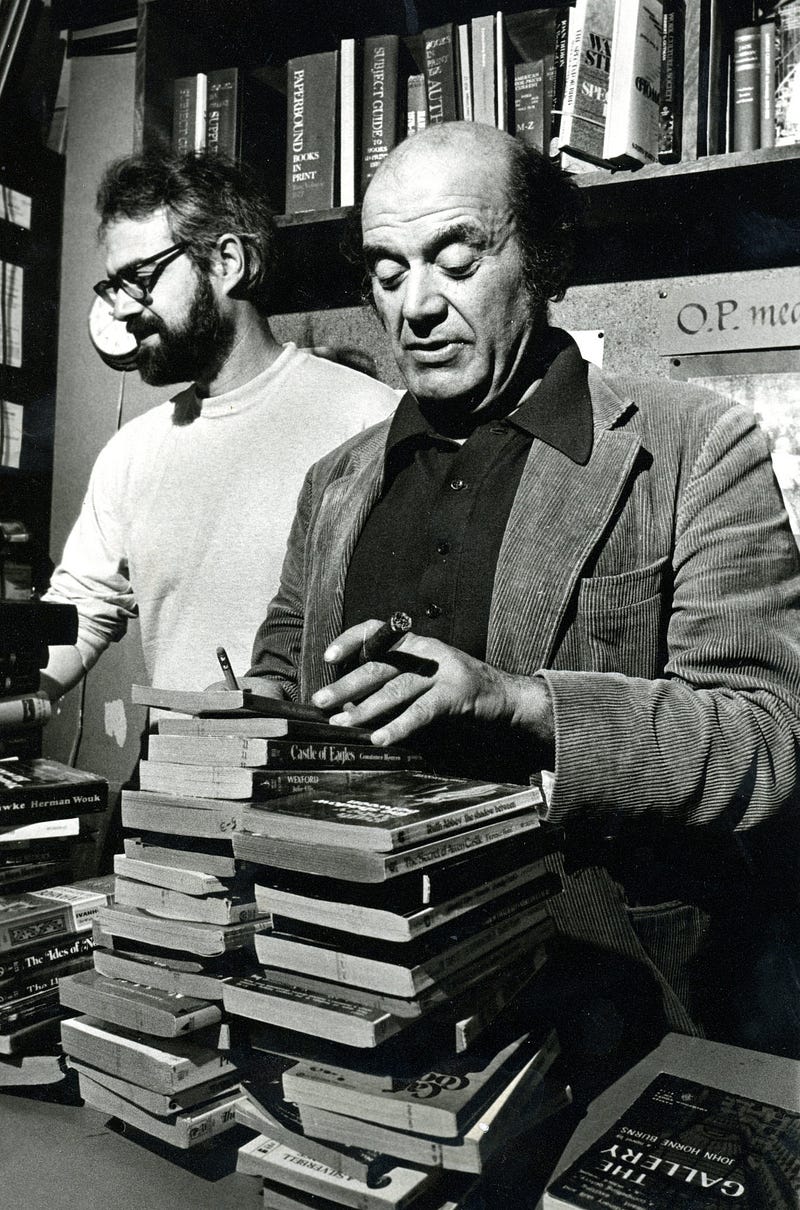
Moe Moskowitz (1921–1997), who opened the store in 1959, the Beatnik era.
Moe Moskowitz – founder of Moe’s Books, one of America’s preeminent independent bookstores in Berkeley, California. Moe’s opened in 1959 and sells used and new books and has become a beloved landmark in the city of Berkeley for locals and tourists alike and most of it has to do with Moe himself. Before becoming a bookseller, Moe tried several potential professions, such as house painter, ice cream man or worker at art galleries. It was his job as an apprentice picture framer that brought him to Berkeley. He was also a man of strong political convictions, he loved jazz music, playing pool and smoking his cigar. In fact, he was so attached to it that after the city of Berkeley passed a law that banned indoor smoking, he petitioned the city to be allowed to smoke in the store, arguing that it was an essential part of his image (his petition was denied). He was keen on artistic and political freedom, and he supported the Free Speech Movement, the People’s Park protests (which you can read about here), protests against the Vietnam War and Berkely’s underground culture scene. Moe also initiated a trade slip system that exists in the store to this day- if you sell your used books to the store, you can either receive a smaller amount in cash or a higher amount in store credit on a trade slip, which you can then accumulate and spend on getting other books in the store. Moe passed away in 1997 and the bookstore is now run by his daughter Doris. You can read an interview with her here.
Some bookstore owners are so attached to their bookstore that not even passing away can keep them from it… This is the story of Henry Sotheran, owner of Sotheran’s in London, the oldest bookshop in Europe and one of the oldest antiquarian bookshops in the world. Sotheran, who had training as a druggist, opened a bookstore in York in 1761 together with his partner John Todd. The partnership continued for 12 years after which Sotheran moved to another shop. He was hit by a tram and killed and it is said that his ghost still haunts the shop today, throwing books off shelves and causing mischief… You can read more about life and afterlife at Sotheran’s in Oliver Darkshire’s book, Once Upon a Tome: The Misadventures of a Rare Bookseller.
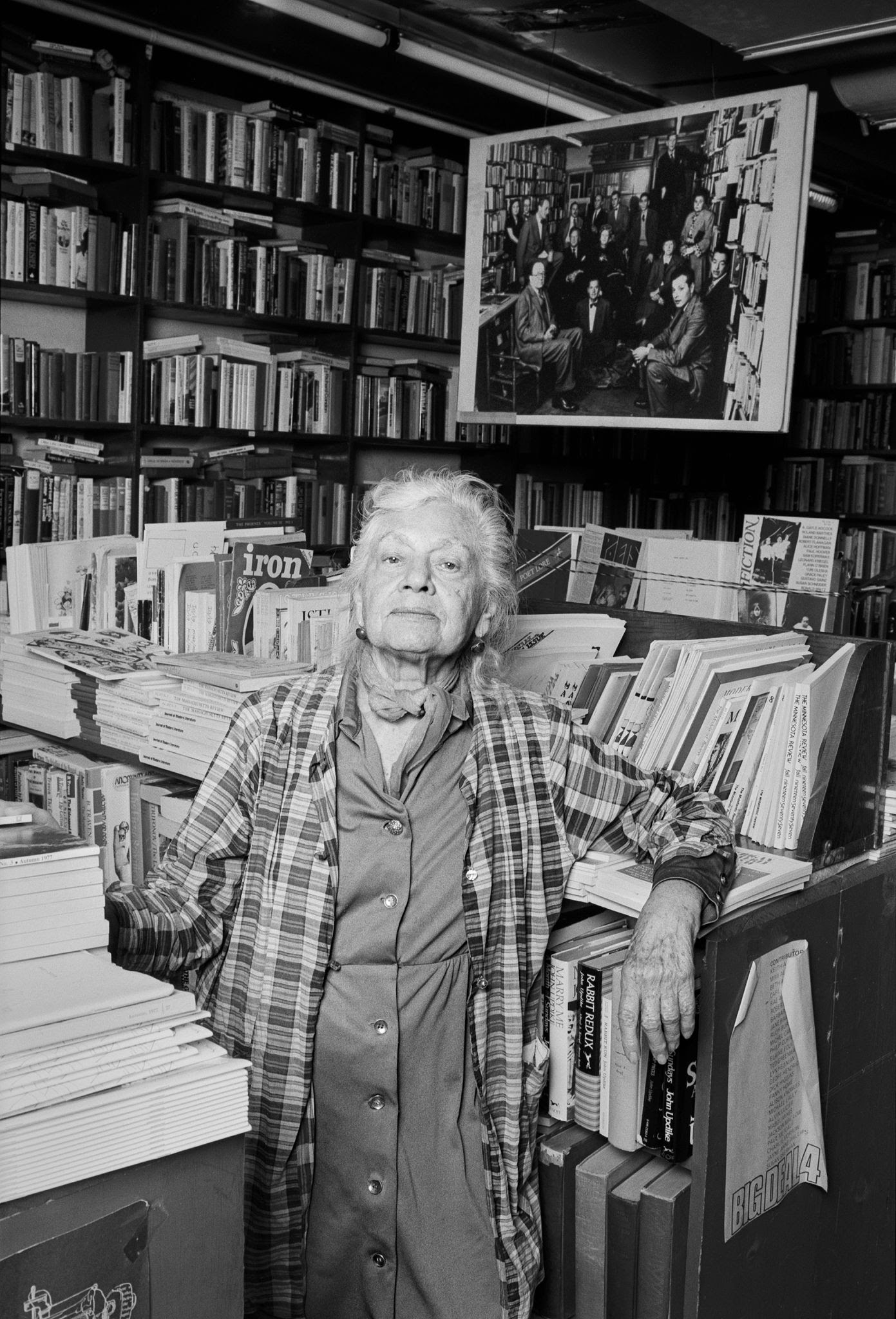
Portrait of American bookseller Frances ‘Fanny’ Steloff (1887 – 1989) as she poses in her store, the Gotham Book Mart, New York, New York, February 23, 1978. (Photo by Lynn Gilbert/Getty Images)
“Wise Men Fish Here”- this was the legendary motto and sign of the Gotham Book Mart in New York City, founded in 1920 by Frances Steloff. She was born in 1887 and was an American literary patron and bookseller. She had a difficult early life and was taken out of school in fifth grade by her adoptive parents. She ran away from home at 20 and worked different jobs until she drifted into bookselling. She honed her book-collecting skills with eminent antiquarian Charles P. Everitt and worked as a clerk at Brentano’s before opening her own bookstore. She befriended avant-garde authors, promoted their works and helped further the careers of literary luminaries such as E.E. Cummings and Tennessee Williams. She hosted events, readings, shows and lectures to promote experimental and non-commercial literature. Gotham is also known as a gateway through which European modernism entered the US, notoriously selling banned books such as D. H. Lawrence’s Lady Chatterley’s Lover and Tropic of Cancer by Henry Miller. Steloff’s customers included J.D. Salinger, Gore Vidal, John Updike, Saul Bellow, Eugene O’Neill and many more. According to The Los Angeles Times, Anais Nin wrote in her diary that Steloff had “a gift for friendship” and that “as a result, everything converges to her store, small magazines, rare books, special, unique people, looking for special books.” Steloff sold the shop in 1967 but she continued living in an apartment above the shop and she went to the shop every day, to sit at a desk in a corner, chat to customers and point them to the right book.
You can find a lot of the books mentioned in this article at Bill& Rosa’s Book Room, a used books bookstore in Boulogne Billancourt.
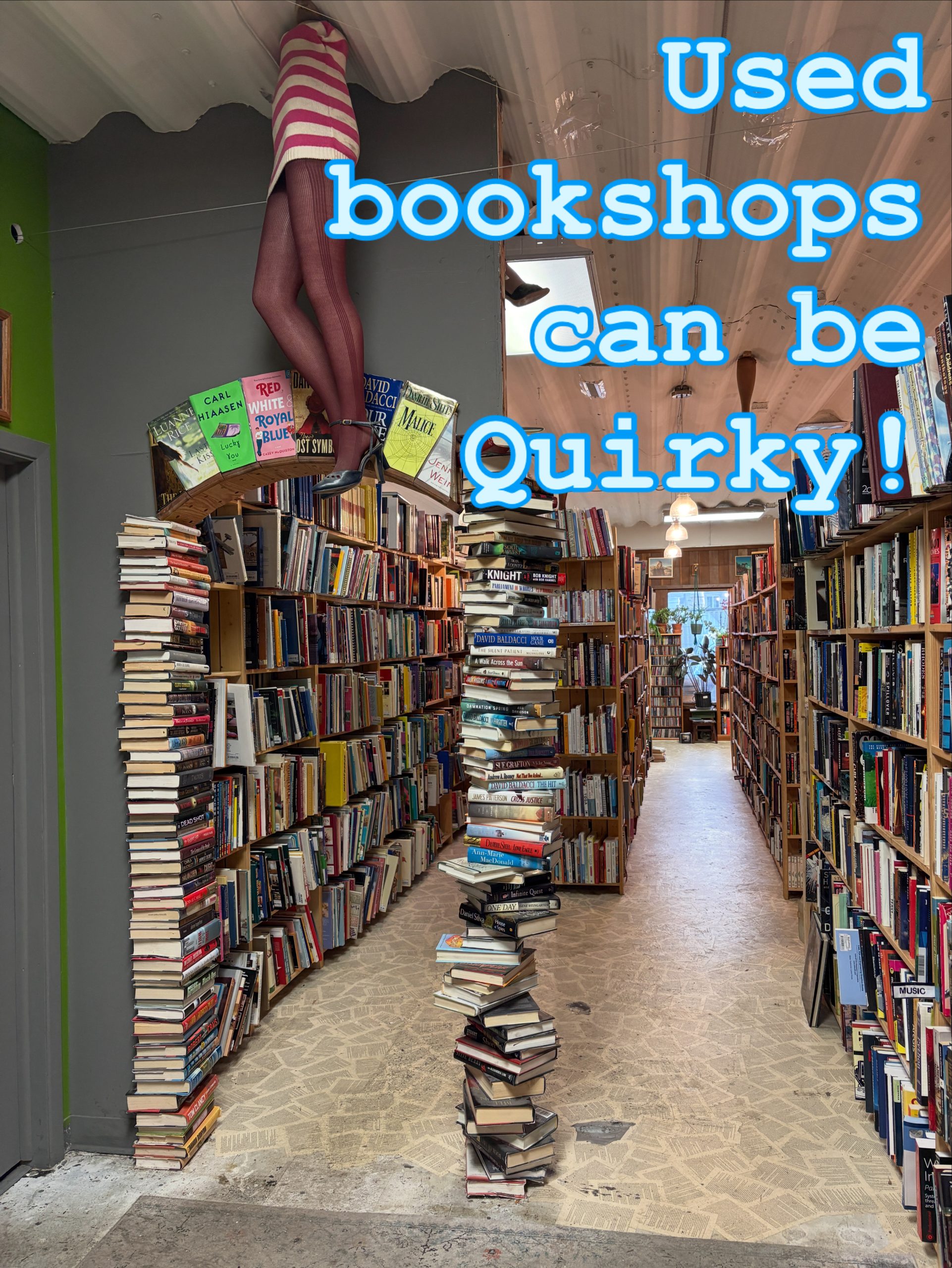
Isle of Books in Bozeman Montana has it’s floor papered in McMurty’s Lonesome Dove.