


The Square Egg
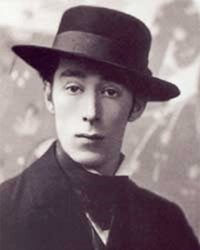
H.H. Munro (SAKI)
This story, The Square Egg, is set in those same trenches – fitting to read for the commemoration of the end of the War on November 11th. Read all the way through, the punchline is, of course, at the end.
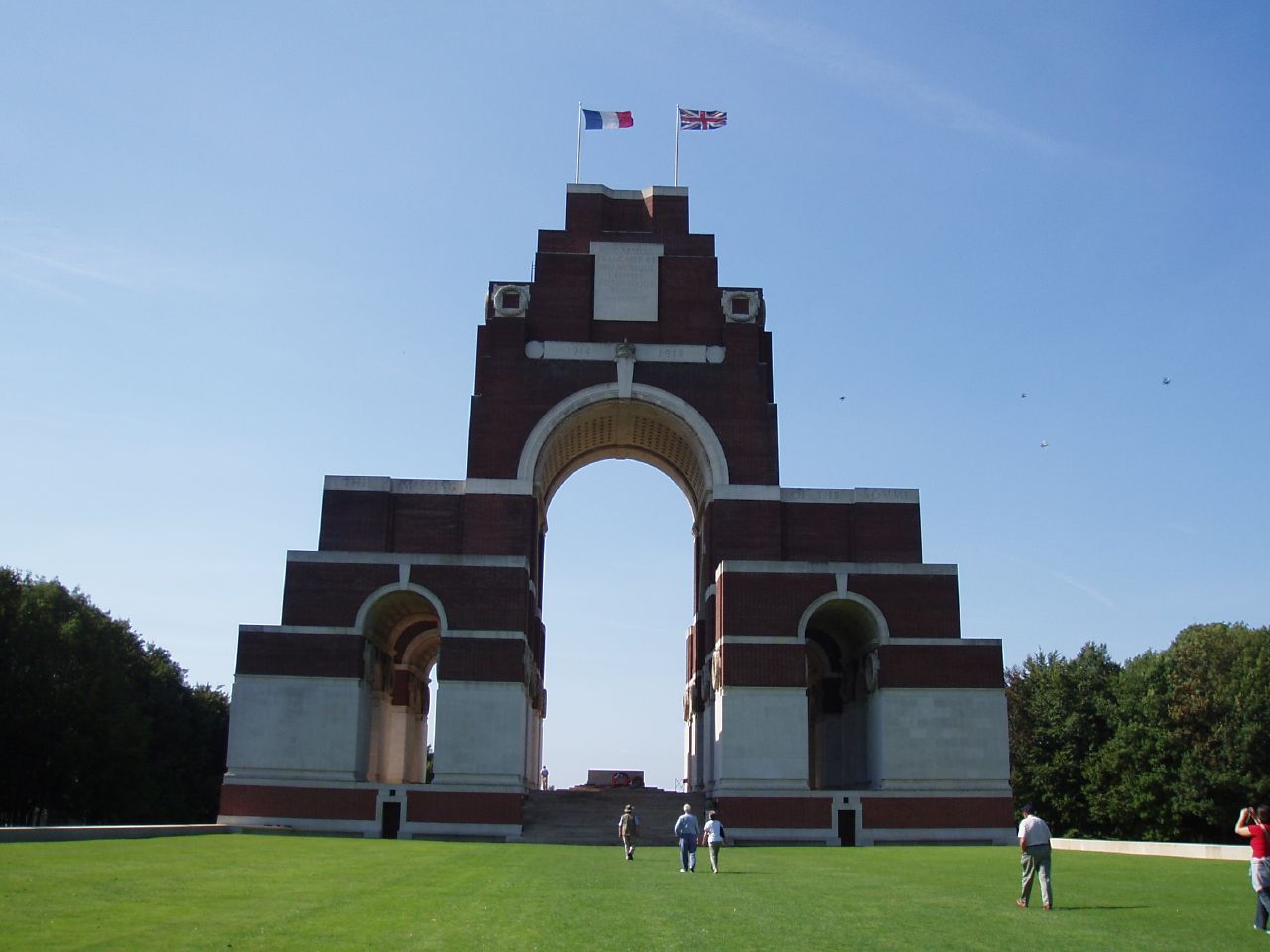
Amanda Slater, from Coventry (England). Creative Commons.
THE SQUARE EGG (A BADGER’S-EYE VIEW OF THE WAR MUD IN THE TRENCHES)
ASSUREDLY a badger is the animal that one most resembles in this trench warfare, that drab-coated creature of the twilight and darkness, digging, burrowing, listening; keeping itself as clean as possible under unfavourable circumstances, fighting tooth and nail on occasion for possession of a few yards of honeycombed earth.
What the badger thinks about life we shall never know, which is a pity, but cannot be helped; it is difficult enough to know what one thinks about, oneself, in the trenches. Parliament, taxes, social gatherings, economies, and expenditure, and all the thousand and one horrors of civilisation seem immeasurably remote, and the war itself seems almost as distant and unreal. A couple of hundred yards away, separated from you by a stretch of dismal untidy-looking ground and some strips of rusty wire-entanglement lies a vigilant, bullet-spitting enemy; lurking and watching in those opposing trenches are foemen who might stir the imagination of the most sluggish brain, descendants of the men who went to battle under Moltke, Bliicher, Frederick the Great, and the Great Elector, Wallenstein, Maurice of Saxony, Barbarossa, Albert the Bear, Henry the Lion, Witekind the Saxon. They are matched against you there, man for man and gun for gun, in what is perhaps the most stupendous struggle that modern history has known, and yet one thinks remarkably little about them. It would not be advisable to forget for the fraction of a second that they are there, but one’s mind does not dwell on their existence; one speculates little as to whether they are drinking warm soup and eating sausage, or going cold and hungry, whether they are well supplied with copies of the Meggendorfer Blätter and other light literature or bored with unutterable weariness.
When one is not thinking about mud one is probably thinking about estaminets. An estaminet is a haven that one finds in agreeable plenty in most of the surrounding townships and villages, flourishing still amid roofless and deserted houses, patched up where necessary in rough-and-ready fashion, and finding a new and profitable tide of customers from among the soldiers who have replaced the bulk of the civil population. An estaminet is a sort of compound between a wine-shop and a coffee-house, having a tiny bar in one corner, a few long tables and benches, a prominent cooking stove, generally a small grocery store tucked away in the back premises, and always two or three children running and bumping about at inconvenient angles to one’s feet. It seems to be a fixed rule that estaminet children should be big enough to run about and small enough to get between one’s legs. There must, by the way, be one considerable advantage in being a child in a war-zone village; no one can attempt to teach it tidiness. The wearisome maxim, « A place for everything and everything in its proper place » can never be insisted on when a considerable part of the roof is lying in the backyard, when a bedstead from a neighbour’s demolished bed-room is half-buried in the beetroot pile, and the chickens are roosting in a derelict meat safe because a shell has removed the top and sides and front of the chicken-house.
Perhaps there is nothing in the foregoing description to suggest that a village wine-shop, frequently a shell-nibbled building in a shell-gnawed street, is a paradise to dream about, but when one has lived in a dripping wilderness of unrelieved mud and sodden sandbags for any length of time one’s mind dwells on the plain-furnished parlour with its hot coffee and vin ordinaire as something warm and snug and comforting in a wet and slushy world. To the soldier on his trench-to-billets migration the wine-shop is what the tavern resthouse is to the caravan nomad of the East. One comes and goes in a crowd of chance-foregathered men, noticed or unnoticed as one wishes, amid the khaki-clad, be-putteed throng of one’s own kind one can be as unobtrusive as a green caterpillar on a green cabbage leaf; one can sit undisturbed, alone or with one’s own friends, or if one wishes to be talkative and talked to one can readily find a place in a circle where men of divers variety of cap badges are exchanging experiences, real or improvised.
In the estaminet of the Fortunate Rabbit I found myself sitting next to an individual of indefinite age and nondescript uniform, who was obviously determined to make the borrowing of a match serve as a formal introduction and a banker’s reference. He had the air of jaded jauntiness, the equipment of temporary amiability, the aspect of a foraging crow, taught by experience to be wary and prompted by necessity to be bold; he had the contemplative downward droop of nose and moustache and the furtive sidelong range of eye—he had all those things that are the ordinary outfit of the purse-sapper the world over.
« I am a victim of the war, » he exclaimed after a little preliminary conversation.
« One cannot make an omelette without breaking eggs, » I answered, with the appropriate callousness of a man who had seen some dozens of square miles of devastated country-side and roofless homes.
« Eggs! » he vociferated, « but it is precisely of eggs that I am about to speak. Have you ever considered what is the great drawback in the excellent and most useful egg—the ordinary, everyday egg of commerce and cookery? »
« Its tendency to age rapidly is sometimes against it, » I hazarded; « unlike the United States of North America, which grow more respectable and self-respecting the longer they last, an egg gains nothing by persistence; it resembles your Louis the Fifteenth, who declined in popular favour with every year he lived—unless the historians have entirely misrepresented his record. »
« No, » replied the Tavern Acquaintance seriously, « it is not a question of age. It is the shape, the roundness. Consider how easily it rolls. On a table, a shelf, a shop counter, perhaps, one little push, and it may roll to the floor and be destroyed. What catastrophe for the poor, the frugal! »
I gave a sympathetic shudder at the idea; eggs here cost 6 sous apiece.
« In the course of several hundred years one might arrive at such a result, » I said; « it would more probably take several thousands. »
« With your cold Northern conservative slow-moving hens that might be the case, » said the Acquaintance impatiently and rather angrily; « with our vivacious Southern poultry it is different. Listen. I searched, I experimented, I explored the poultry-yards of our neighbours, I ransacked the markets of the surrounding towns, wherever I found a hen laying an angular egg I bought her; I collected in time a vast concourse of fowls all sharing the same tendency; from their progeny I selected only those pullets whose eggs showed the most marked deviation from the normal roundness. I continued, I persevered. Monsieur, I produced a breed of hens that laid an egg which could not roll, however much you might push or jostle it. My experiment was more than a success; it was one of the romances of modern industry. »
Of that I had not the least doubt, but I did not say so.
« My eggs became known, » continued the soi-disant poultry-farmer; « at first they were sought after as a novelty, something curious, bizarre. Then merchants and housewives began to see that they were a utility, an improvement, an advantage over the ordinary kind. I was able to command a sale for my wares at a price considerably above market rates. I began to make money. I had a monopoly I refused to sell any of my ‘ square-layers,’ and the eggs that went to market were carefully sterilised, so that no chickens should be hatched from them. I was in the way to become rich, comfortably rich. Then this war broke out, which has brought misery to so many. I was obliged to leave my hens and my customers and go to the Front. My aunt carried on the business as usual, sold the square eggs, the eggs that I had devised and created and perfected, and received the profits; can you imagine it, she refuses to send me one centime of the takings! She says that she looks after the hens, and pays for their corn, and sends the eggs to market, and that the money is hers. Legally, of course, it is mine; if I could afford to bring a process in the Courts I could recover all the money that the eggs have brought in since the war commenced, many thousands of francs. To bring a process would only need a small sum; I have a lawyer friend who would arrange matters cheaply for me. Unfortunately I have not sufficient funds in hand; I need still about eighty francs. In war time, alas, it is difficult to borrow. »
« On a big scale, yes, but I am talking of a very small matter. It is easier to arrange a loan of millions than of a trifle of eighty or ninety francs. »
The would-be financier paused for a few tense moments. Then he recommenced in a more confidential strain.
« Some of you English soldiers, I have heard, are men with private means; is it not so? It is perhaps possible that among your comrades there might be someone willing to advance a small sum—you yourself, perhaps—it would be a secure and profitable investment, quickly re- paid »
« If I get a few days’ leave I will go down to Verchey-les-Torteaux and inspect the square-egg hen-farm, » I said gravely, « and question the local egg-merchants as to the position and prospects of the business. »
The Tavern Acquaintance gave an almost imperceptible shrug to his shoulders, shifted in his seat, and began moodily to roll a cigarette. His interest in me had suddenly died out, but for the sake of appearances he was bound to make a perfunctory show of winding up the conversation he had so laboriously started.
« Ah, you will go to Verchey-les-Torteaux and make inquiries about our farm. And if you find that what I have told you about the square eggs is true, Monsieur, what then? »
« I shall marry your aunt. »
—
Also enjoy this excerpt from American author Willa Cather’s One of Ours. Where she depicts American Doughboys in a French cheese shop.
Read more of Saki’s stories also available in book form at Bill & Rosa’s Book Room

White faced saki monkey. Creative Commons