


True or False? 20 things called French that may or may not be. Are they really French?
The following items are called French. But are they really French origin? We did a bit of research on the origins of these items and why they are called French. Some are, some aren’t, some wanna be. And some you really can’t tell.
French dressing? TRUE!
French dressing originally came from French vinaigrette, so this is true. Take, for instance, the 1896 Boston Cooking School Cookbook. This is the first and original Fannie Farmer Cookbook. The first cookbook ever to codify cooking. https://fusac.fr/a-brief-history-of-the-cookbook/ The section on Salad Dressings begins with French Dressing, which calls for simply oil, vinegar, salt, and pepper – a traditional salad sauce the French call Vinaigrette. Then In the early twentieth century, « French dressing » evolved from being just another term for vinaigrette to describing a specific style of salad dressing. American versions often added extra flavors to the base, such as paprika, ketchup, Worcestershire sauce, onion juice, sugar, Tabasco sauce, paprika, or tomato, but retained the name. The Edgewater Beach Hotel, a fashionable resort on Chicago’s waterfront, was famous for its elegant salads and featured several French Dressing recipes in its cookbook, even organizing them by color—with No. 4 labeled as Orange. Kraft once offered different types of French Dressing, including vinaigrettes like « Oil & Vinegar » and « Kraft Italian, » as well as Catalina, Miracle French, and Creamy Kraft French. Many Americans grew up eating the creamy orange version, so today, the origins of French dressing are largely forgotten and the current industrial product is anything but French.
French fries? TRUE!
« French fries » likely got their name from either American WWI soldiers in French-speaking Belgium or from the culinary term « frenching, » meaning to cut into strips. Thomas Jefferson referenced « potatoes served in the French manner » in 1802, and « French fried potatoes » showed up in English cookbooks by the 1850s. In France, they’re called frites which simply means fried. Similarly, green beans cut into strips are called French beans.

Photo © Judith Bluysen
French horn? TRUE! But…
In the 17th century, French horn makers revolutionized the basic hunting horn by shaping it into the round, coiled instrument, which is why it’s called the « French horn »… in English. Later, German craftsmen introduced valves, turning it into the chromatic horn we know now. Interestingly, in French, it’s simply called un cor, or “a horn.”
Inversely the French term cor anglais or « English horn, » neither comes from England nor is part of the brass family like other so-called « horns ». The English horn began as a straight tenor oboe with two keys and an open bell, which looked like the horns depicted in angelic imagery from the Middle Ages. This resemblance led German speakers in central Europe to call it engellisches Horn, meaning « angelic horn. » Because engellisch meant « English » in their everyday language, the name « angelic horn » eventually became known as the « English horn. » We must wonder if they found the English angelic.
French Dip? FALSE!
Nothing French here. This sandwich was invented in Los Angeles. It’s called a French because of the baguette-style roll. The « dip » refers to drenching the bread in the rich meat juices (au jus). The two origin stories are: In 1918, restaurant owner Philippe Mathieu, a French immigrant, accidentally dropped a roll into the juice and the customer ate it anyway. But an older story claims a chef at Cole’s – the oldest public house in LA – dipped a French roll in meat drippings for a customer with sore gums.

Photo © Judith Bluysen
French Roast? TRUE!
Named after the French preference for coffee in the 19th century, which inspired the roasting style. The flavor is bold, smoky, caramelized and bittersweet and has low acidity. En français, le « French roast » est appelé café torréfié à la française.
French Vanilla? FALSE!
It may surprise you that the difference between vanilla and French vanilla has nothing to do with vanilla beans. The difference is in the ice cream base. French vanilla ice cream is made with egg yolks and is closer to a frozen custard (sweetened cream thickened with egg yolks), which makes it a pale-yellow color. The possible reason “French” is used to describe the recipe is that Madagascar and Tahiti are former French colonies. France used their colonial power to import vanilla beans easily and cheaply. That’s why so many French desserts, from crème brûlée to canelés are flavored with vanilla.

French_Braid by Stilfehler, CC BY-SA 3.0 via Wikimedia Commons
French braids? FALSE!
Nope not really French. The earliest known English use of « French braid » was in an American short story in Arthur’s Home Magazine, describing it as a novel style. The American magazines in the 1870s, linked the intricate style to French fashion, but the technique itself is much more ancient, with origins likely in North Africa, China, or even earlier. The name reflects admiration for French style rather than its true birthplace. A French braid starts at the crown, adding hair to each section as you braid down, creating a braid that lies flat against the head, unlike a Dutch braid (which stands out). In France cornrows are called nattes africains–African braids.
French 75 Cocktail? TRUE!
Created around 1915 in Paris, probably at Harry’s New York Bar. The drink was so strong that it was compared to the powerful and fast-firing « 75 » field gun, a French gun from World War I. The drink was concocted of gin (or cognac), lemon juice, sugar, and Champagne to create a strong, celebratory and refreshing drink that was popular with soldiers in Paris during the war.
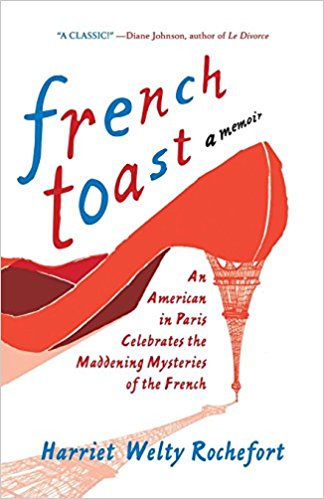
French Toast? FALSE!
French toast is called « French toast » primarily due to a legendary New York innkeeper, Joseph French, who supposedly named it after himself in 1724. But it’s more likely a marketing term by American colonists to make the dish sound sophisticated as it was popularized by French immigrants. However it actually originated in ancient Rome as pain perdu (lost bread). Harriet Welty Rochefort named her humorous first memoir of living in Paris “French Toast”.
French Manicure? FALSE!
Another French thing from Los Angeles. It was called a French manicure when LA nail polish entrepreneur Jeff Pink popularized it in the 1970s. He named it after its success on the Paris fashion runways, linking it to French chic, though it was invented in Hollywood for actresses needing a versatile look for quick costume changes. The French call it La French. Watch out manIcure is manUcure in French.
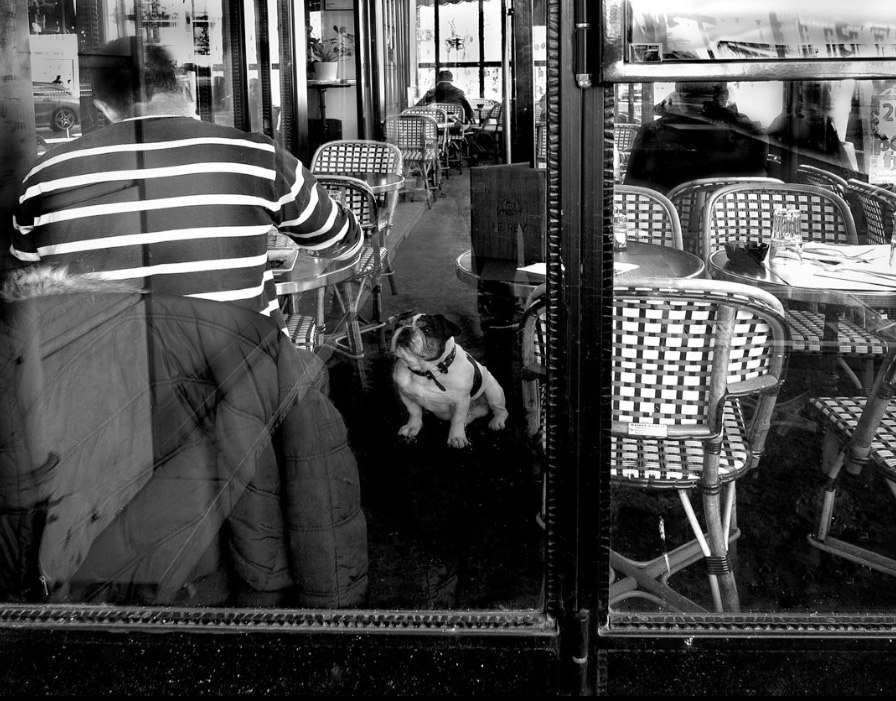
Photo © Judith Bluysen
French Bulldogs? TRUE!
French Bulldogs are called « French » Bulldogs because lace makers from Nottingham, England, brought their small Bulldogs to France during the Industrial Revolution. The dogs became incredibly popular, especially in Paris. The French embraced these companion dogs, developing them further with traits like their signature « bat ears, » solidifying their French identity. Eventually they evolved into the distinct breed known as the Bouledogue Français.
French Onion Soup? TRUE!
While onion soups have existed since Roman times, French chefs elevated it from a simple peasant broth to a beloved bistro classic in 18th-century Paris thus solidifying its « French » identity. A French onion soup has specific characteristics like slow-caramelized onions, rich beef broth, and gratinée cheese topping.
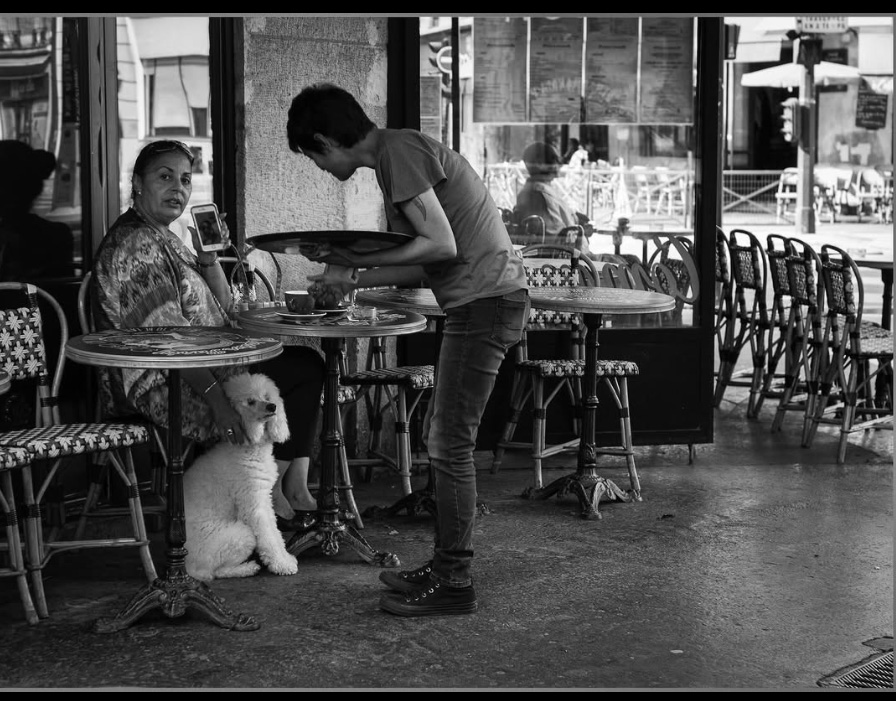
Photo © Judith Bluysen
French Poodle? TRUE!
We know the French love their dogs and here’s another dog pedigree from France. The breed became popular and was standardized in France. It originated in Germany as a water retriever used for retrieving ducks (poodle comes from the German pudeln meaning « to splash »). French breeders refined the Poodle into the elegant dog we know today, creating smaller sizes and associating it with French aristocracy, though they’re called caniche (duck dog) in France.
French Doors? TRUE!
French doors are a prime example of the architectural advancements that first happened in France during the remarkable period called The Age of Enlightenment. Minds were Enlightened figuratively but spaces literally. More glass meant more light and technology was up to the task. French doors were essentially large windows that people could step through to access balconies or terraces, bringing light and views indoors before electricity. This interior design element was also an indicator of homeowner wealth due to the high price of glass at the time. The Hall of Mirrors at Versailles is a good example. The term portes-fenêtres is used in France.
By the way, a Dutch door is from the same period and desire for letting the light in. It is split horizontally into two halves that open independently. Practical for farm life—letting in air and light while keeping animals and dirt out.

French Curve CC BY-SA 3.0 via Wikimedia Commons
French curve? FALSE?
A French curve is a template usually made from metal, wood or plastic composed of many different curved segments. It is used in manual drafting and fashion design to draw smooth curves of varying radii. The curve is placed on the drawing material, and a pencil, knife or other implement is traced around the curves. They were invented by the German mathematician Ludwig Burmester and are also known as Burmester (curve) set. It’s called a French curve because these versatile drafting templates became popular and were widely adopted in French design and pattern-making. En français, une « french curve » s’appelle un gabarit de courbes, ou parfois un pistolet ou un perroquet (termes plus anciens ou familiers).
French kiss? TRUE!
It’s called a « French kiss » because American and British soldiers of WWI returned from France after encountering French women who were more open to passionate, tongue kissing. This was a style seen as exotic and sensual compared to their Puritan-bred norms. Once enlightened they brought the technique home, associating it with the perceived sexual liberality of the French. Oh! how I remember learning the phrase rouler une pelle (also rouler un patin ou une galoche) at the dinner table of my French family when I was a student. I wish I knew how we got on that topic in the presence of three generations, but the young men of the group sure wanted me to learn this new bit of vocab. And boy did I blush!
French Drain? FALSE!
A French drain is named after Henry Flagg French (1813–1885) from Concord, Massachusetts. Mr French was an American lawyer, farmer, and U.S. Assistant Treasury Secretary. He popularized the subsurface drainage system in his 1859 book, Farm Drainage, to improve waterlogged farmland. His method used gravel-filled trenches with tiles to channel water away, a concept that evolved into modern French drains used for foundations and yards with perforated pipes and geotextiles for better performance. En français, un « French drain » se traduit par drain français, bien qu’il soit aussi appelé drain de fondation, drain de périmètre ou drain de sous-sol.

French Knot? FALSE!
French knots have been a popular embroidery stitch for centuries, with some historians believing that they originated in China or India before spreading to Europe. The name « French knot » likely comes from the fact that the stitch was popularized in France during the 16th and 17th centuries. In traditional embroidery, French knots were often used to create small, intricate details like flower centers and animal eyes. They were also used in combination with other stitches to create delicate, textured designs. French knots have also been used in other cultures and regions around the world, often with their own unique variations. For example, in Japanese embroidery, a similar stitch called the « knot stitch » is used to create small, tight knots with a square shape. En français, le « French knot » s’appelle le point de nœud.
French Cleat? TRUE!
A mounting system (often wood) used by French shipbuilders for hanging cabinets, named for its origin in France. A French cleat uses two interlocking, beveled strips (typically 45°)—one on the wall, one on the object—to securely hang heavy items like cabinets, mirrors, or tool holders flush and strong by using gravity, ideal for workshop organization or heavy decor. This system offers significant strength making it superior to simple hooks for large items. Appelé extrémité de tasseau, taquet ou extrémité de traverse ou plus récemment « taquet français ».
French Terry ? TRUE!
This knit fabric with loops on one side is named from the French word « tirer » (to pull). French Terry is a versatile knit fabric known for its smooth face and soft, looped backing. It is breathable, moisture-wicking, and comfortable for both activewear and loungewear such as hoodies, joggers, and sweatshirts. It offers warmth without bulk. Tissu éponge français / Jersey bouclette / Bouclette.
So there you have it only 12 out of our 20 items actually have French origins and can be called really French!
To read more about word etylmologies see our other articles in the series “Why is it called…” https://fusac.fr/tag/etymology/
And to enjoy more of Judith Bluysen’s wonderful photos of Paris please visit her Instagram page @ luluparee https://www.instagram.com/luluparee/?hl=en
We created a Speak Easy Puzzle about things named after nationalities. The Speak Easy Puzzle was a popular feature in the FUSAC magazine for more than 25 years. Readers liked them so much they would cut them out and save the whole collection. It is widely used by teachers of English and French as well. Because they were so popular we combined them into a lively book illustrated with watercolors. This Speak Easy Puzzle is one of 150 puzzles in a 3 volume collection which is available exclusively at Bill & Rosa’s Book Room or by email : BRBookRoom@gmail.com
There are more sample Speak Easy Puzzles on our website.
https://fusac.fr/avoir-les-portugaises-ensablees/