


90+ reasons why we love France
Reasons 61-94 (and we could go on an on!)
61. For placing the toilet is in a separate room. An excellent space saver. Having a room just for the toilet allows for having less bathrooms and keeps all the odors in one place.
62. For inspiring Walt Disney. If you like Disney World, you have a French man to thank. Cinderella, Sleeping Beauty, Little Red Riding Hood or Puss in Boots were written by Charles Perrault who was born January 12, 1628 in Paris. He was founder of and certainly one of the masters of a literary genre, the fairy tale.
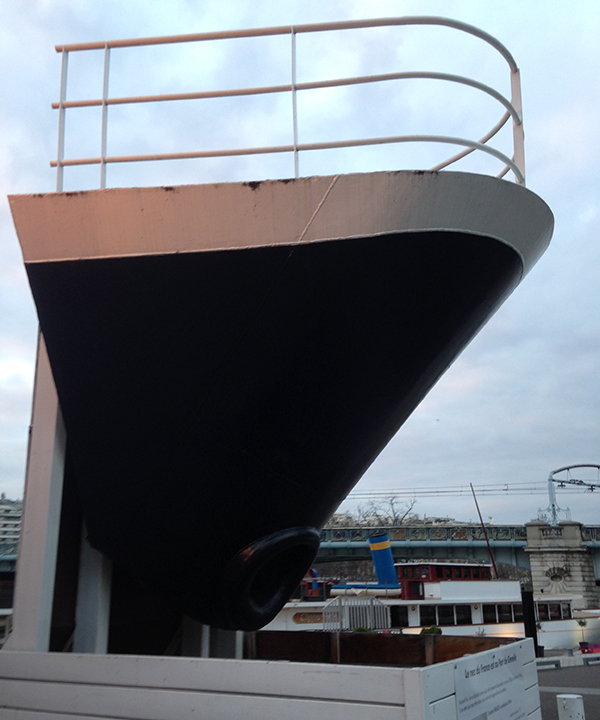
The nose of the ocean liner Le France in Paris on quai de Grenelle
63. For ship building. A French company, Pontant, is behind the conception of an ice-breaker cruise ship capable of taking luxury to the most rare areas of the planet: the Arctic and Antarctic. There ship building companies in all the French ports and a highly specialized yacht builders on the Cote d’Azur. Tidbit: La France is the country Le France is the ship.
64. For consistently hosting 8% of the world’s tourists each year. The Association of British Travel Organisers to France (ABTOF), wrote “One country can offer three very different coastlines (channel, western and Mediterranean), several mountain ranges (Alps, Pyrenees, Jura, Massif Central and extinct volcanos in the Auvergne), a very wide spectrum of food, wines and beers, different climates.” Elsewhere Anthony Peregrine, author of Telegraph Travel’s Le Rosbif Writes column, becomes positively lyrical on this subject: “France is the whole of Europe in one country. It has the lot, both physically (mountains, rivers, coastlines both Atlantic & Med, lakes, plains, great estuaries and anything else you might need, bar icebergs) and culturally. From the German and Flemish-influenced north, by way of Celts in Brittany, Basques, Catalans being noisy about rugby and Perpignan, Spaniards roaming Languedoc and as much Italian incursion as you need on the Côte-d’Azur – not to mention a whole swathe of frankly French French in the middle – you couldn’t want for more. And all that translates into a rich tapestry (are tapestries ever anything else?) of different foods, wines, drinks, traditions, music and, God help us, folk-dancing.Travel from Strasbourg in the far north-east, with its choucroute, beer, riesling and outrageous head-gear (black bows like crows pinned to young girls’ heads) all the way to Basque Bayonne in the deep south-west, full of chipirones stuffed squid, cured ham, berets and dark fellows in white playing pelota – and you’ve experienced more brands of foreignness than any other European country can provide. »
65. For sharing borders with 8 nations, giving it a central, easily accessed and important position in Europe.
66. For taking heritage seriously. There are 41 designated UNESCO World Heritage sites, Thirty-seven of these are cultural properties, three are natural properties, and one is mixed. There are also 15 intangible heritages. Add to that 50,000 building which are preserved as Monuments Historiques.
67. For an inherent emphasis on making things beautiful if for no other purpose than to make something beautiful. Just look at all those window displays, the wrapping of purchases at the boulangerie or in shops “C’est pour offrir?” and plates of food!
68. For finest examples of roman, gothic, neoclassical and baroque and renaissance architecture. For the huge number of chateaux you can visit.
69. For its wonderfully central position in the world making it easy to visit many many places from here.
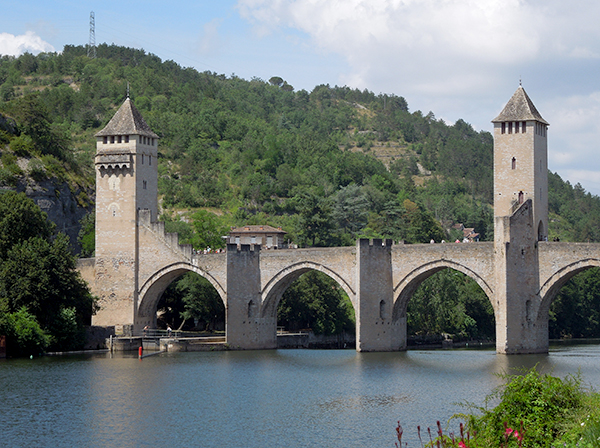
The Pont Valentré in Cahors
70. For a plethora a medieval cities such as Carcassonne, Aigue-Mortes, Avignon, Cahors, …
71. For easy tax compliance! According to the Figaro France has been well-rated by Price Waterhouse Coopers as being a simple place to do business as per meeting tax obligations. Thanks to more and more digitalization a company spends an average of 139 hours to accomplish their fiscal requirements in France, as opposed to 218 in Germany and 240 globally. And honestly it is easy for the individual too – just compare it to a 50+ page American tax declaration!
72. For liqueurs. Have you tried Chartreuse? Grand Marnier? Calvados? Cognac? Absinthe? Pineau de Charente? Pommeau? Génépi? Just to name a few and of course For wines…For beers and ciders
73. For museums: 1243 of them and counting
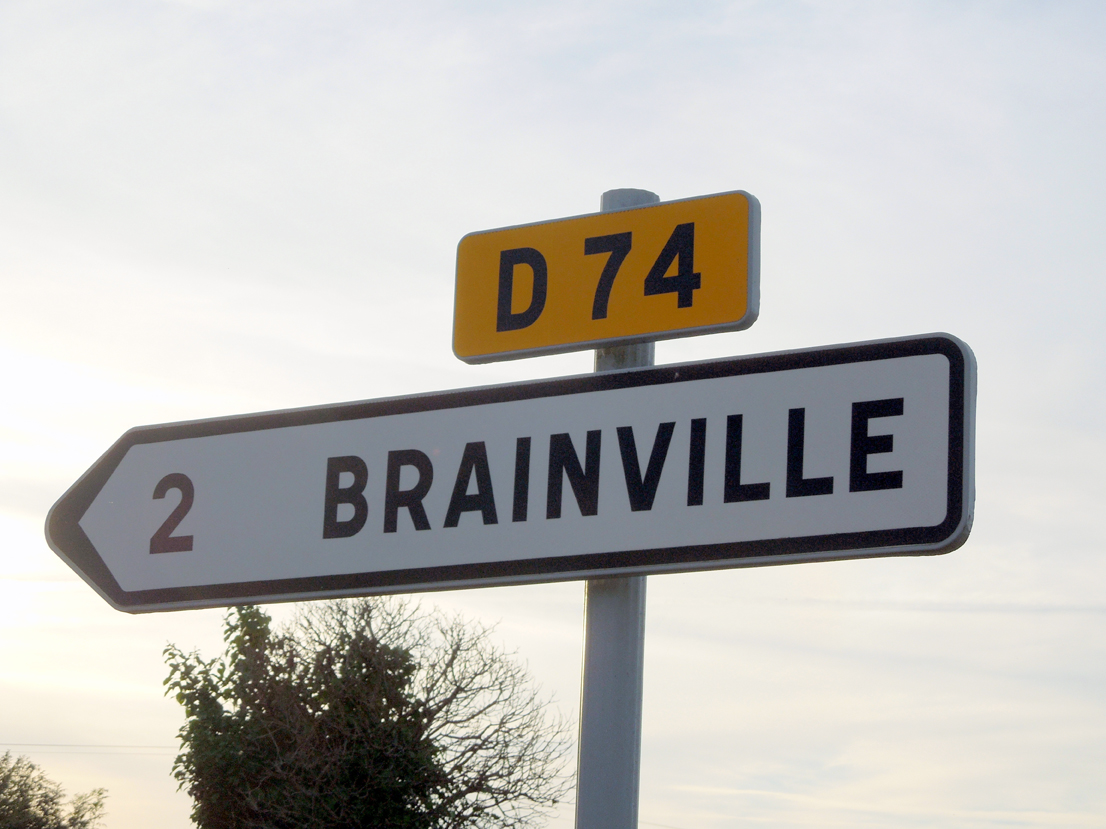 74. For town names to giggle about: Condom, Anus, Tendon, Ars, Seix, Grouchy, Brainville, Bust, Rye, Cudos, Rancon, Le Bugue and Y. And how about these for French laughs (say them outloud): Trécon, Conas, Verdelais, Marans, Achiet-le-Grand, Arnac-la-Poste, Corps-Nuds, Le Déluge, Bellebrune, Bidon, Plaisir, …
75. For the creation the restaurant. The term restaurant is itself French, coming from the verb « se restaurer » meaning to restore the spirits and relieve ailments. Before the Revolution, there were less than 50 restaurants in Paris. By 1814 3,000 restaurants were listed in the Almanach des Gourmands – a popular travel guide. Many restaurants in Paris were once called bouillons. The concept started with a butcher named Pierre Louis Duval in 1855. Mr Duval’s bouillon didn’t serve food, but a broth of meat and stock – a bouillon or restaurant – that which restores. He served the workers at Les Halles and the idea spread. Read more about historic restaurants in Paris.
76. For manicured gardens and streets. Perfectly trimmed trees in even the smallest towns.
77. For mehnirs, dolmens, megaliths and monoliths. A megalith is a large stone that has been used to construct a structure or monument, either alone or together with other stones, most often dating from the neolithic period. The most famous French example is Carnac in Brittany. Carnac, the largest known example of aligned stones, is thought to have an astronomical function. The dolmen of La Roche aux Fées in the Ille-et-Vilaine department is the largest dolmen in France and the best conserved on in Europe. In the Paris area there is a dolmen called Pierre Turquaise in the Val-d’Oise, also dolmens and menhirs abound in the Essonne and Yvelines.
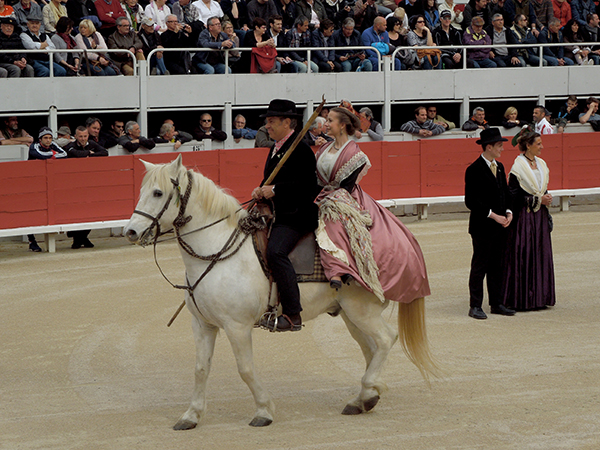
78. For the historic traditional costumes which are brought out for folk festivals. Each region has distinctive festivals and costumes linked to long standing traditions. The elegant arlésiennes at the Féria in Arles come to mind along with the lace coifs of Brittany and Strasbourg.
79. For a flair for juxtaposing the old and the new. Consider the Mucem in Marseille a contemporary and lacey cube of a building on the port linked to the Fort Saint Jean from the 15th century; Un dimanche à Paris showcases the vestiges of a Philippe-Auguste tower from the 12th century in the center of their sleek modern tearoom; the pyramid at the Louvre; and the annual contemporary art presented in the chateau and gardens of Versailles.
80. For the real definition of Antique. The Antique Théâtre d’Orange, built by the Romans, along with the Pont du Gard, Maison Carré and many other antique sites.
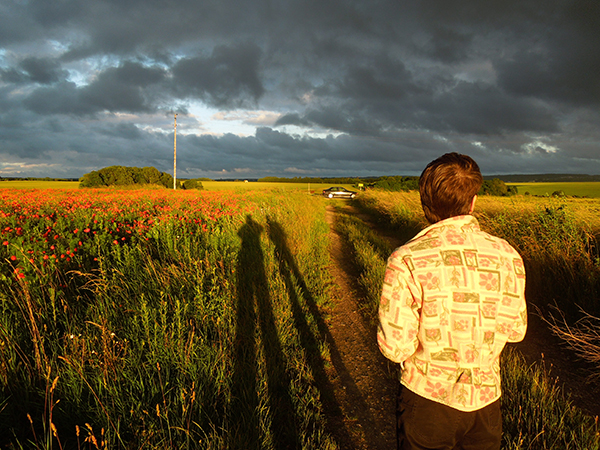 81. For the light. The impressionists didn’t paint in the Ile de France region for nothing! I continue to enjoy “impressionist skies” nearly every day, there is a luminosity here that you find no where else.
82. For the visionary Frenchman Jean Monnet, son of a Cognac distiller, who understood that Europe needed to work together and wrote the founding text based on a unified coal market.
83. For respect of maternity. Ever interested in keeping its population increasing the French have many systems in place to make child bearing and rearing easier. From a long paid maternity leave, an option for 2 years of parental leave, to baby care, pre-school, family subsidies, free education through university level and even a medal for mothers of large families.
84. For shoes: espadrilles, charentaises, Christian Louboutin red
« Paris is always a good idea », says Audrey Hepburn in the 1954 movie, Sabrina.
85. For just right climate that even Goldilocks would like. Not too hot, not too cold, not too dry, not too wet, not too violent, but sometimes too windy – the Mistral and Tramontane can make one crazy when they blow for days.
86. For her rich soil making agricultural products of high quality and a food surplus that can be exported. Have you ever tried « les Carottes du sable » from the coast of Normandy? The sand in which they are grown is mineral rich from the sea adding to their flavor and nutritional value.
87. For appreciation of family. French families stick together, gathering not just for holidays, but also birthdays, christenings and of course weddings. Many even gather regularly for Sunday dinner. Sometimes they even vacation three generations together. The extended family is important too and most French people know their cousins and even second cousins quite well.
88. For being specialists of acronyms. Here are a few you must know: SNCF, RATP, FN, LR, SMIC, SDF, PCF, CEDEX, CDI, SOPALIN, DOM-TOM, SAMU, SIDA, SIRET, BRICS, NAC, IBAN, RIB, PACS, PACA, PIB, OTAN, DELF, TCF, PDG, CRS, CGT, CV, FUSAC, LOOFE are all French vocabulary words as such, some are even conjugated, and often their long form is unknown. https://fusac.fr/french-acronyms/
89. For savoir-faire, savoir-vivre, joie de vivre…
90. For fields of yellow canola, flax, lavender, poppies, sunflowers
91. For the University of Paris, one of the oldest universities in the world, and one of the first established in Europe, founded between 1150 and 1250, often known as La Sorbonne, named after the founder Robert de Sorbon, confessor of Louis IX. It was originally established as a private corporation around 1150 and was later chartered as a university. It has been located on the flanks of Mont Sainte Genevieve since the 12th century where three levels of learning were taught: the baccalauréat, the licence and the doctorat.
92. For the most wonderful terms of endearment: Ma puce, Ma biche, Mon coco, Mon poussin, Ma poule, Mon loulou, Ma pupuce, Mon chou, Mon lapin, Ma choupette, Mon trésor, Petitoune …
93. For discretion: quiet presence, discreet voices on cell phones and in restaurants, well-behaved children
94. For their comics, Laurent Gerra, Jamel, Claudia Tagbo, Gad Elmaleh, Gaspard Proust, Anne Roumanoff, Mureil Robin, Florence Foresti, Coluche, and so many others who perpetuate(d) the French art of derision.