


UNESCO Collection of Representative Works
The UNESCO Collection of Representative Works was a UNESCO translation project that was active between 1948 and 2005. It was meant to translate masterpieces of world literature (especially from lesser-known languages) into English, French, Spanish and Arabic or into another less well-known language so that they could be available to the widest audience possible, with the aim of promoting cultural understanding between peoples, educating and stimulating reflection. UNESCO saw books as not merely entertainment, but also as a way to encourage the development of world peace. When the project initially started out, it was confined only to translations from and into Arabic and it expanded little by little to other languages as more countries learned of the project and joined. The project stopped in 2005 when it ran out of funds. Until then, UNESCO funded the translation of about 1400 works from over 80 countries translated from over 100 languages. Some countries, eager to promote their national literature, covered the costs of the translation and publication themselves.
The initiative was part of the Culture& Future program, one of UNESCO’s 14 major programs that deals with cultural identity and cultural interrelationships. The goal of the initiative was to promote literary translation and the literary works of less-known cultures, to help people better understand each other. It also aimed at promoting less-known works of cultural significance that would not be published by commercial publishers.
Considering the huge number of works published, UNESCO had to come up with a set of guiding principles for choosing which works would be selected for the project such as if the book had already been translated or not, or if the author was already well-known in their country or not. Usually, the National Commission for UNESCO in each country, publishers, translators or governments proposed a list of works to be translated, the list would then be examined by a committee of experts appointed by the International Council for Philosophy and Humanistic Studies. This committee would also recommend and help find competent translators, the lack of which was often a problem and could mean that some works did not get translated. UNESCO also provided scholarships for the translators of these works, encouraging them to spend a year in the country whose language they were translating, for a full immersion into the language and culture. Each work was published with annotations that were meant to help the reader better understand the cultural specificities of the country he was reading about. The works chosen for publication were aimed at the general reader, to be published in low-cost collections such as paperbacks and could be used in literature courses in high school or college.
The works translated cover a broad spectrum that includes traditional works but also works that represent contemporary minority cultures. In fact, it’s interesting to note that at the beginning, the bulk of the programme was dedicated to classics but this evolved in time to include contemporary authors of note. Some authors whose work was first translated and published as part of this project went on to become major international authors and, in some cases, even to win the Nobel Prize for literature. Such is the case of Greek poet Giorgos Seferis, Icelandic author Halldor K. Laxness, or Japanese author Yasunari Kawabata. UNESCO never published the works itself, instead, it worked in partnership with publishers from all over the world.

The programme became gradually obsolete as publishing houses (no doubt encouraged by the emergence of a serious market for foreign literature) and private and public institutions started to come up with their own plans for discovering and promoting literatures that were until then largely ignored. The project has now adapted and evolved into a programme aimed at supporting and developing literary translation. Although largely unknown to the greater public, this programme seems to have had a big impact on the world of publishing and the book market, as it promoted less known literatures from around the world and the professionalization of those working in the book industry.

You can see the list of translated works here then, use key words “representative works” and choose books. Most books are out of print. The list makes an erudite book club or personal reading list with a wide variety of themes and original languages from Dhivehi to Tetum.
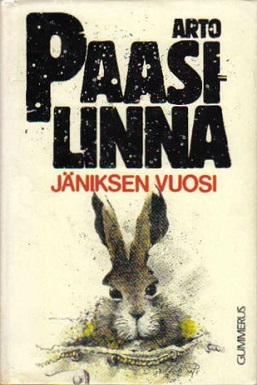
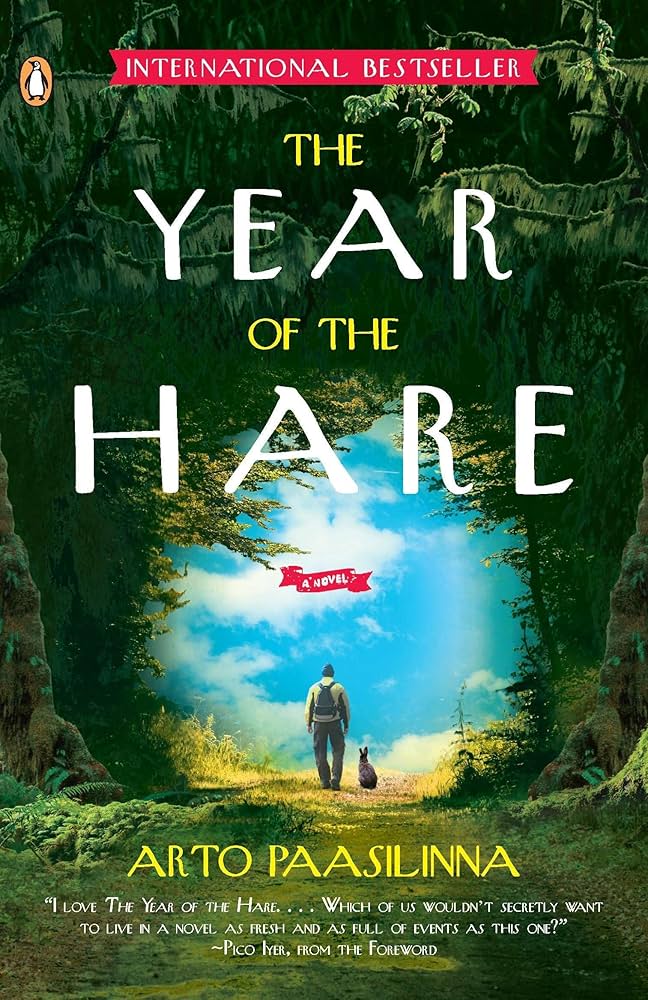
We found one recently among the Bill & Rosa’s Book Room donations. A popular Finnish novel “The Year of the Hare” by Arto Paasilinna. A picaresque story about a journalist who abandons his mundane life after accidentally hitting a hare with his car, leading him and the injured hare on a series of comical adventures through the Finnish wilderness as he seeks freedom and a new way of life. The book, originally published in 1975, is known for its fable-like quality, humor, and exploration of themes like freedom, nature and escaping modern life. It has been translated into many languages and adapted into films.